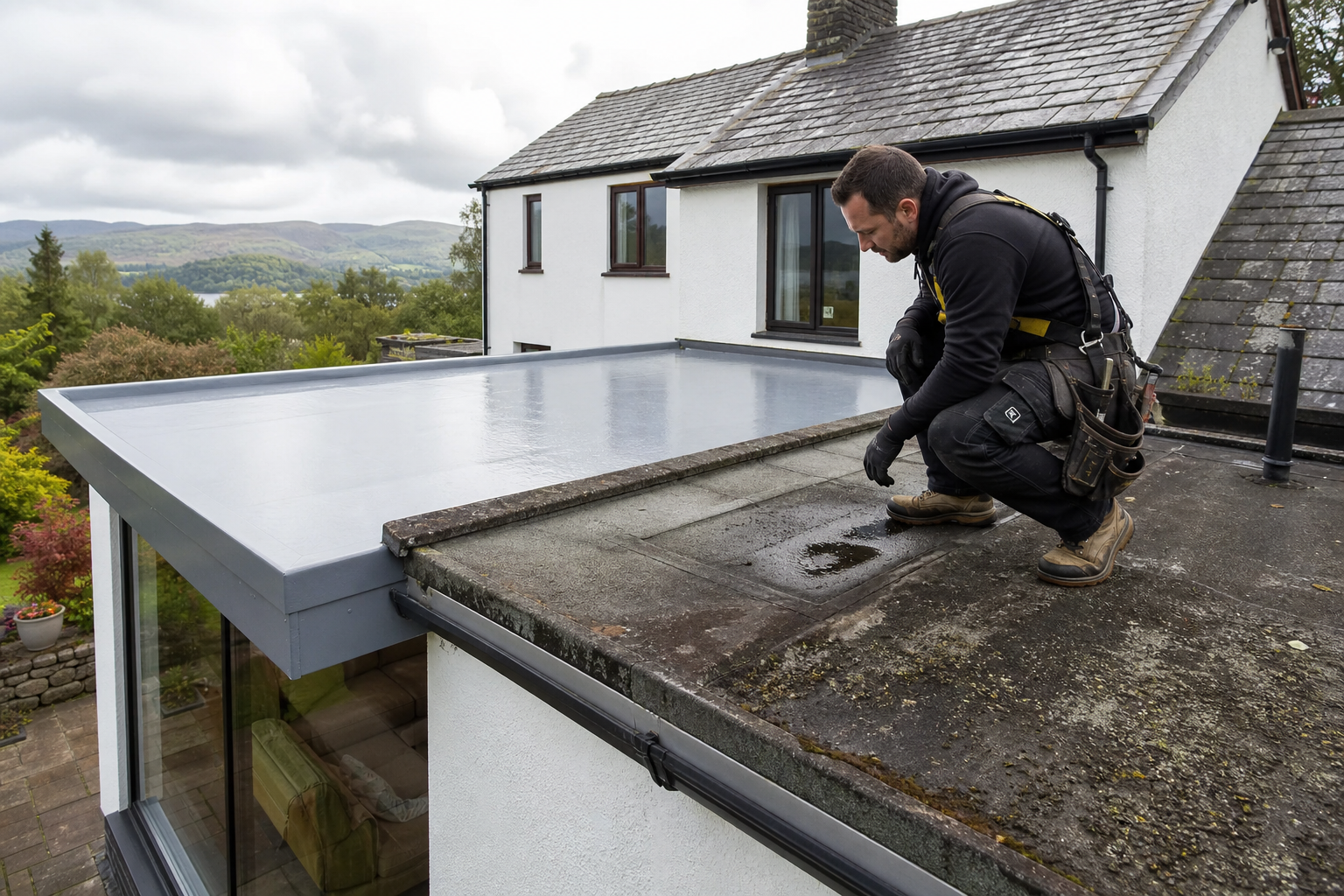
Emergency Roof Repairs in South Cumbria: What to Do After Storm Damage
A storm can turn a sound roof into an urgent problem in minutes. If you need emergency roof repairs South Cumbria homeowners can rely on, the first priority is to keep everyone safe, limit water getting in and arrange professional help quickly. Heavy rain, strong winds and seasonal storms can loosen tiles, damage flashing, force water into weak points and leave gutters struggling to cope.
At Fell Roofing, we provide 24 hour emergency call-outs across South Cumbria, Kendal and the Lake District. Based in Heysham, Morecambe, we help homeowners deal with sudden leaks, storm damage and other urgent roofing problems with clear advice, fast diagnosis and practical repairs.
Emergency roof repairs South Cumbria: why speed matters after a storm
Storm damage is not always dramatic from the ground. A single slipped slate, cracked tile or lifted section of flashing may look minor, but it can allow water to reach under the roof covering and into the structure below.
Acting quickly can help you:
Reduce the spread of internal water damage
Protect insulation, ceilings and loft timbers
Lower the chance of a small defect becoming a larger repair
Keep your home safer during further bad weather
If rain is already getting in, arranging professional roof repairs in South Cumbria quickly can make the difference between a targeted repair and a much wider problem.
What to do immediately after storm damage
1. Put safety first
Do not climb onto the roof to inspect the damage yourself. Storm-affected roofs can be unstable, and surfaces may be slippery even when the rain has stopped. Stay at ground level and keep family members away from any area where tiles, slates or guttering could fall.
If water is coming through near electrics, treat it seriously and take appropriate precautions inside the property.
2. Limit damage inside your home
If a leak has started, move furniture, rugs and valuables away from the affected area where possible. Use buckets, towels or waterproof sheeting to catch drips and protect floors.
This will not solve the roofing problem, but it can reduce immediate disruption while you arrange professional help.
3. Check the roof from ground level only
Walk around the property and look for visible signs of storm damage. You may notice missing tiles, slipped slates, damaged ridge sections, bent flashing or guttering that has pulled away.
Also check the loft if it is safe to do so. Damp patches, fresh drips, daylight through the roof covering or wet insulation can all indicate where water is getting in.
4. Record what you can see
Take clear photos from a safe position. This creates a useful record of the damage and can help when discussing the issue with a roofer or checking your insurance paperwork.
The aim is to document the problem, not to investigate dangerously.
5. Arrange professional help as soon as possible
Urgent roofing issues rarely improve by waiting. If your roof has been affected by wind or heavy rain, contact a roofing specialist with experience in leaks, storm damage and emergency call-outs.
For sudden leaks, slipped tiles and weather-related problems, our emergency roof repairs service is available across South Cumbria and surrounding areas.
Common storm damage problems we see across South Cumbria
Slipped, cracked or missing tiles and slates
High winds can loosen or remove roof coverings, especially around edges, ridges and older repaired sections. Even one missing tile can expose the roof beneath to rainwater.
If tiles or slates have come down onto the ground, treat that as a sign the roof needs prompt attention rather than waiting for another spell of bad weather.
Leaks around chimneys, flashing and roof junctions
Storms often find the weak points in a roof. Chimney abutments, flashing details and changes in roof level are common areas for water ingress when wind drives rain sideways.
If you notice staining on ceilings or damp around chimney breasts after a storm, the entry point may be higher up than it first appears.
Flat roof wear exposed by heavy rain
On flat roofs, heavy rainfall can reveal splits, weak seams or worn waterproof layers that were less obvious in dry weather. Water may sit on the surface longer, and any defect can quickly lead to internal leaks.
If you are also concerned about ongoing flat roof issues, you can read more about practical repair options through our roof leak repairs and roofing services.
Guttering, fascias and soffits under strain
Storm damage is not always limited to the main roof covering. Strong winds and overflowing rainwater can affect guttering, fascias and soffits, especially where brackets are already under pressure or debris has built up.
When rainwater is no longer carried away properly, it can end up running back onto the roofline or down external walls. Fell Roofing also provides guttering and roofline services to help protect the property as a whole.
When should you call for urgent roofing help?
Some storm damage can wait a short time for planned repairs, but certain problems need urgent attention. You should call for help quickly if you notice:
Active water ingress into the loft or living space
Missing tiles or slates after high winds
Flashing lifted away from a chimney or roof junction
Visible sagging or movement in part of the roof
Guttering pulled away and water pouring close to the walls
Damage discovered when more rain is forecast
If you are unsure whether the problem counts as an emergency, it is still worth asking. Early advice is often the best way to prevent further deterioration.
What Fell Roofing can help with after storm damage
Fast diagnosis and practical roofing repairs
We are a long-established, family-run roofing specialist covering South Cumbria, Kendal and the Lake District since 2011. Homeowners contact us for leaking roofs, slipped tiles, storm damage, chimney roof repairs, waterproofing and wider maintenance work.
Our approach is straightforward. We identify the likely source of the problem, explain what needs attention and carry out practical repairs designed for local weather conditions. That includes roofing issues caused by heavy rain, strong winds and seasonal storms.
Support across South Cumbria and nearby areas
From our base in Heysham, Morecambe, we cover South Cumbria and surrounding areas including Kendal, Ulverston, Windermere, Grange-over-Sands, Carnforth, Lancaster and Barrow-in-Furness.
Because we work in this part of the country every day, we understand how exposed many properties can be during poor weather and why a fast response matters.
Why homeowners choose Fell Roofing
24 hour emergency call-outs: available seven days a week
Local experience: covering South Cumbria, Kendal and the Lake District since 2011
Family-run service: professional, reliable and straightforward to deal with
Broad roofing expertise: from roof repairs and storm damage to flat roofing, guttering, fascias and soffits
Clear next steps: fast diagnosis, practical advice and a free, no-obligation quote
Frequently asked questions
How quickly should I arrange emergency roof repairs after storm damage?
As soon as it is safe to do so. Even a small defect can allow water into the roof structure, and the risk usually increases if more bad weather follows. Prompt action gives you the best chance of keeping the repair smaller and more manageable.
What signs of storm damage should I look for from the ground?
Look for missing or slipped tiles, broken slates, dislodged ridge sections, bent flashing, overflowing gutters and debris on the ground that may have come from the roof. Inside the property, new damp patches, drips or staining after heavy rain are all warning signs.
Can a leaking roof be repaired without replacing the whole roof?
In many cases, yes. A localised fault such as storm-damaged tiles, failed flashing or a specific leak point can often be repaired without full replacement. The right answer depends on the condition of the roof and how widespread the damage is.
Do you cover Kendal and the Lake District as well as South Cumbria?
Yes. Fell Roofing covers South Cumbria, Kendal and the Lake District, along with nearby areas such as Ulverston, Windermere, Grange-over-Sands, Carnforth, Lancaster and Barrow-in-Furness.
Should I wait if the leak seems small?
It is usually better not to wait. Small leaks often become much more disruptive after the next spell of wind or rain. If you have noticed water ingress, getting expert advice early is the safest course.
Protect your home with the right next step
Storm damage can start with one loose tile or one vulnerable joint, but it rarely stays small for long. If your roof has been hit by heavy rain or strong winds, stay safe, act early and get the problem assessed before more water gets in.
Need urgent help after storm damage? Contact Fell Roofing for a fast diagnosis and a free, no-obligation quote in South Cumbria. Call 01524 488077 or visit Fell Roofing to arrange an emergency call-out.