
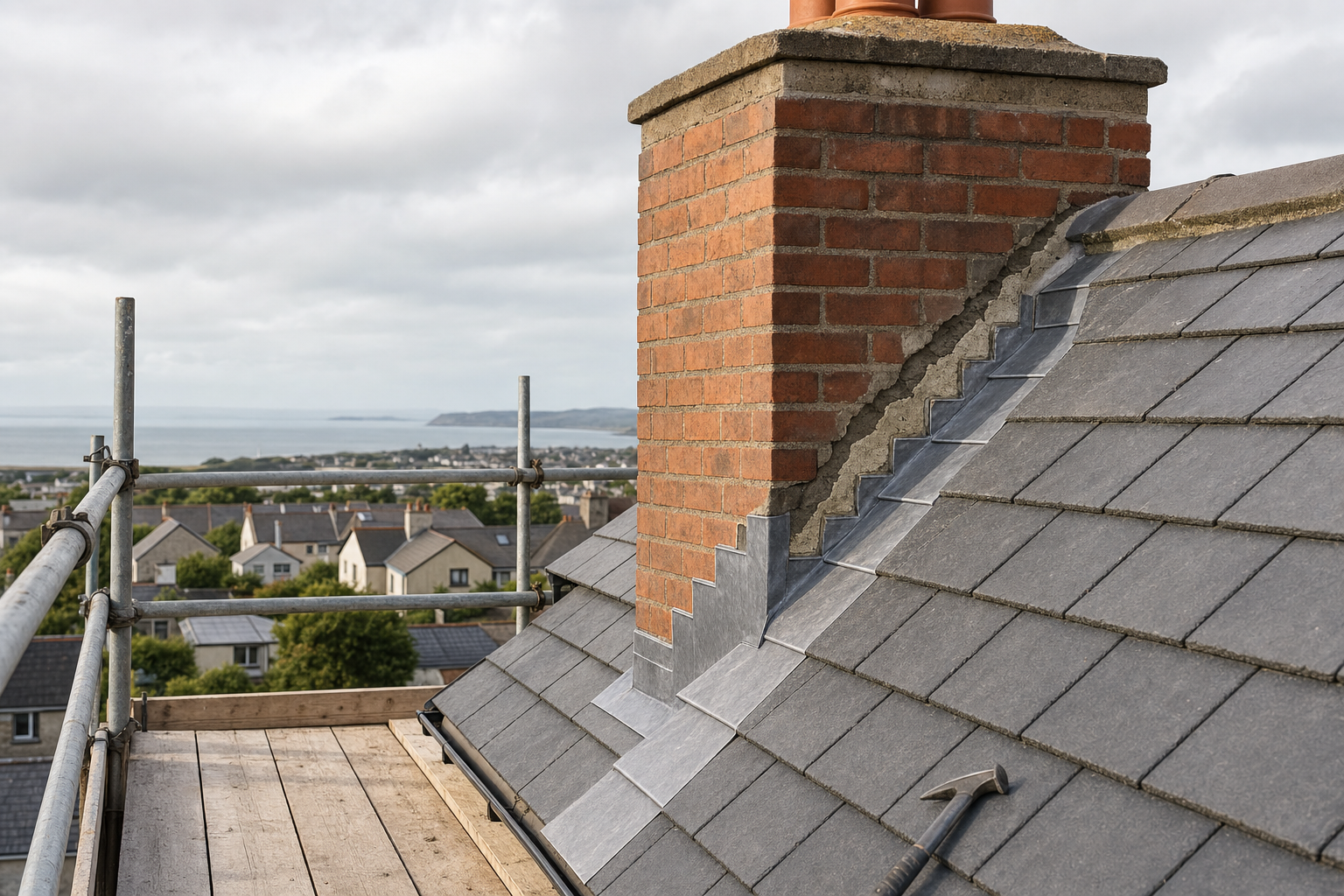
Why tricky junction work lands with Fell Roofing
The whole junction is checked
Flashing, covering and nearby masonry are assessed together, not treated as separate faults.
No faith placed in quick smears
We shape, secure and integrate the repair instead of relying on a short-lived cosmetic fix.
Local or full replacement advice
You get a clear view on whether the detail can be repaired or needs replacing outright.
Junction details that direct water away properly
Roof leaks often begin where one part of the building meets another rather than out in the middle of the main roof field. Chimneys, abutments, parapets and changes in roof level all rely on sound flashing details to keep water moving away from the joint instead of behind it. With Fell Roofing, flashing repairs cover warning signs such as lifting edges, splits, open chases, staining below a junction and leaks that keep coming back during wind-driven rain. We assess both the flashing itself and the adjoining masonry or roof covering, because a perfectly shaped repair is of little use if the surface it meets has already failed. Correct shaping, overlaps and integration with the surrounding roof are what make the finished detail hold up once the weather turns foul.
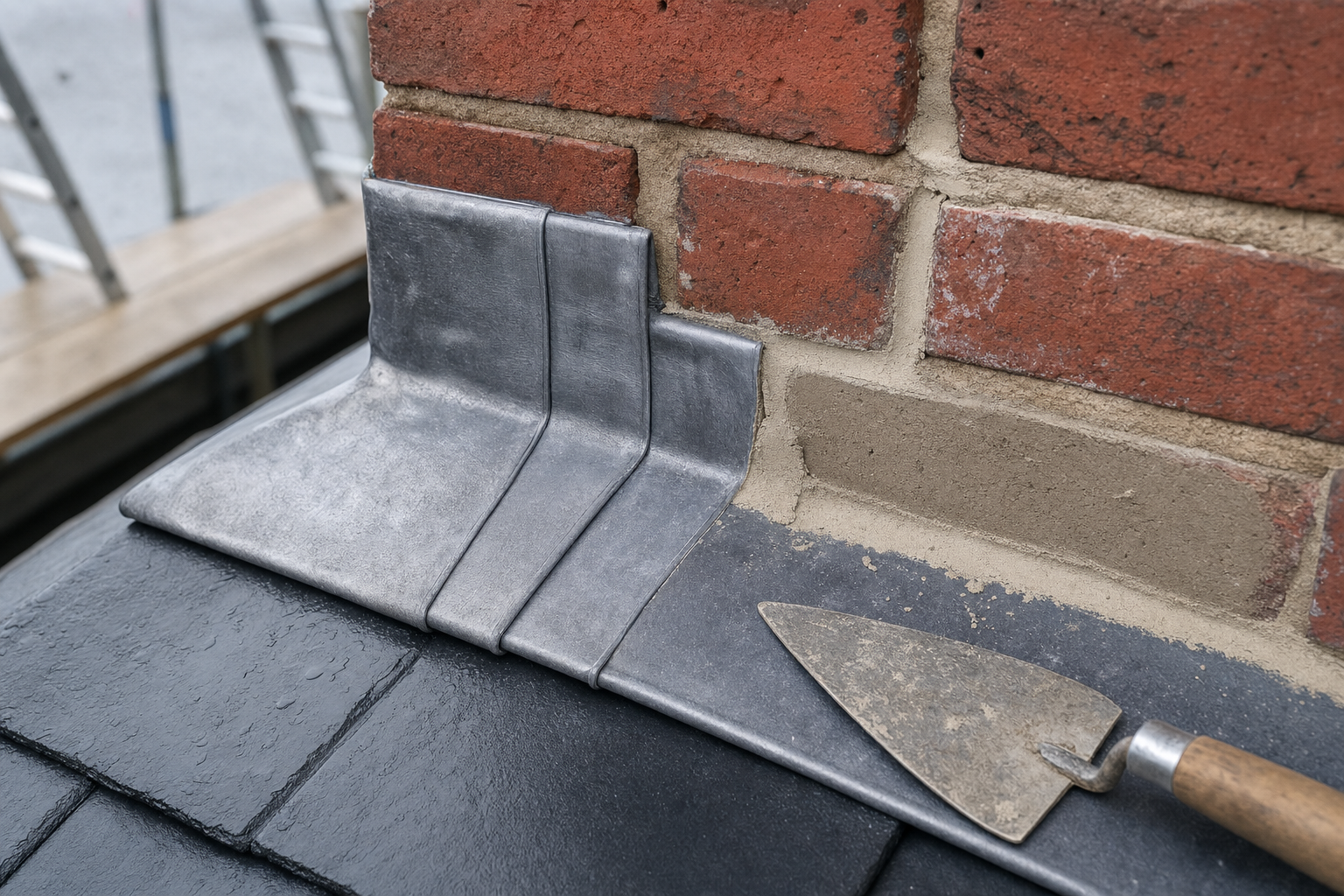
Repair, reseat or replace the failed section
Not every flashing needs ripping out, but not every tired junction can be saved with a quick dab of sealant either. Some details simply need resecuring because the material remains sound. Others need a local repair where damage is confined to one section. And where the flashing has clearly failed, replacement is the more sensible route. We judge that after looking at the full junction, not just the most visible split or loose edge. A quote from Fell Roofing gives you a proper basis for fixing the joint before it spends another wet week proving how much damage a small opening can do.
Frequently asked questions
What are the common signs that flashing has failed?
Lifting edges, visible splits, open chases, staining below a roof junction and repeat leaks during wind-driven rain are all warning signs. Those symptoms suggest water is no longer being directed away cleanly, so the joint needs checking before the damage spreads further into the surrounding roof or masonry.
Can a flashing leak come from the masonry next to it?
Yes. The flashing may be the visible detail, but adjoining masonry or roof coverings can also contribute to the leak if they have loosened, cracked or opened up around the junction. That is why we assess the whole area together rather than assuming the lead alone is always at fault.
Do all flashing problems need full replacement?
No. Some sound details can be reseated or locally repaired if the problem is limited. Full replacement tends to make more sense where the flashing has clearly failed, split or lost its integrity across a larger section. We decide based on condition, not on using the biggest fix by default.